



 July 28, 2026
When you care for a family member, your daily routine is guided by love and compassion. Whether you’re helping a parent get ready for the day, assisting a spouse out of a favorite chair, or safely transferring a loved one into bed, your focus is on their comfort, dignity, and well-being.
In the middle of meeting someone else’s needs, it’s easy to overlook your own. Yet the physical demands of caregiving can take a significant toll on your body.
Helping someone lift, stand, reposition, or transfer safely places repeated stress on your back, shoulders, and joints. Even movements that seem routine can lead to muscle fatigue, strains, or chronic lower back pain when performed day after day. Protecting your own health isn’t selfish. It’s an essential part of providing consistent, compassionate care.
By learning proper body mechanics, using simple assistive devices, and knowing when to seek additional support, you can reduce your risk of injury while continuing to care for your loved one safely and confidently.
In this guide, we’ll cover:
- Why everyday caregiving tasks can lead to injuries over time.
- When back pain signals it’s time to see a doctor.
- Best practices for assisting with chairs, beds, and other common movements.
- Equipment that reduces physical strain and improves safety.
- How respite care and personalized in-home care can support both you and your loved one.
The hidden physical strain on family caregivers
Caregiving is a physical journey. Everyday moments like helping someone sit up, guiding them in the bathroom, or assisting with balance require continuous effort. Because these movements happen gradually, many family caregivers don’t realize how much strain they’re placing on their bodies until discomfort becomes part of their daily routine.
Research highlights just how common this burden is. More than 53% of family caregivers experience low back pain related to physical care tasks such as transfers and mobility assistance. Studies also show that caregivers spend prolonged periods in awkward postures, exposing their spines to significant stress during manual lifts and transfers.
Remember: Back injuries rarely happen because of one difficult lift. More often, they’re the result of small movements repeated day after day without proper body mechanics.
When back pain may be more than muscle fatigue
Most soreness from caregiving improves with rest, but pain that persists or worsens could signal a more serious injury, such as a herniated disc. This occurs when one of the cushioning discs in your spine presses against a nearby nerve, causing symptoms beyond typical muscle fatigue.
Watch for symptoms such as:
- Sharp, shooting pain that travels into your buttock, leg, or arm.
- Numbness or tingling in your leg, foot, arm, or hand.
- Muscle weakness that makes standing, walking, or gripping objects more difficult.
- Pain that worsens with sitting, bending, coughing, or sneezing.
If you experience these symptoms, stop activities that increase your pain and consult a healthcare professional, especially if symptoms persist or interfere with your mobility.
The good news is that many caregiving-related back injuries can be prevented. By practicing proper body mechanics during everyday tasks, you can reduce strain on your spine and move safer.
Four principles of smart both mechanics
Protecting your back doesn’t require extraordinary strength. It starts with using your body efficiently so your legs and core do most of the work, rather than your spine.
- Build a Stable Foundation: Place your feet shoulder-width apart with one foot slightly ahead of the other before beginning a transfer. A wider stance improves your balance and helps you stay steady if your loved one shifts unexpectedly.
- Let Your Legs Do the Lifting: Instead of bending at your waist, bend through your hips and knees. Your legs and glutes are much stronger than your back muscles and are designed to handle heavier loads.
- Keep Your Loved One Close: The farther someone is from your body, the greater the strain on your back. Stay close during transfers to reduce leverage and maintain better control.
- Turn with Your Feet: Avoid twisting your torso while supporting another person’s weight. Pivot your feet so your shoulders, hips, and knees move together.
Applying these techniques during everyday care
Rather than treating every caregiving task differently, focus on applying the same body mechanics during common daily routines.
Helping Someone Stand from a Chair
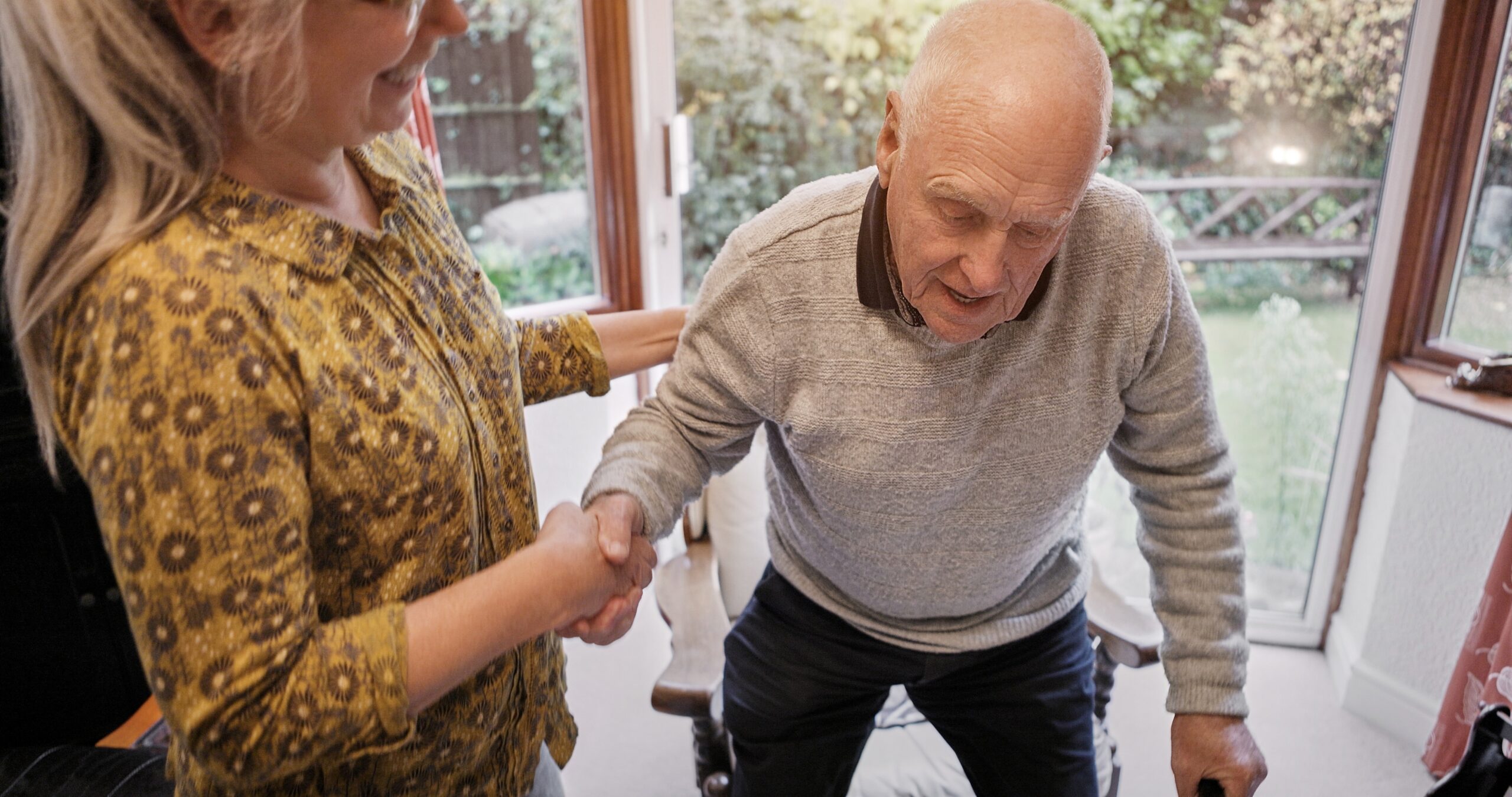
Ask your loved one to move toward the front edge of the chair and place both feet firmly on the floor. Count together before standing so you’re moving at the same time. Support them around the waist or with a transfer belt rather than pulling on their arms or shoulders.
Repositioning Someone in Bed
Raise the bed to a comfortable working height whenever possible to avoid bending over. If available, use friction-reducing slide sheets to help reposition your loved one with less effort and strain.
Encourage Safe Independence
Whenever it’s safe, allow your loved one to participate in the movement by pushing off an armrest or using bed rails. Even small contributions reduce the physical load on you while helping maintain their mobility and confidence.
Assistive tools that reduce physical strain
The right equipment doesn’t replace compassionate care, but it does make caregiving safer and more comfortable for both of you.
- Transfer (Gait) Belt: Provides a secure point of contact during standing and transfers without pulling on clothing or a person’s arms.
- Swivel Seat Cushions: Help someone rotate safely in a vehicle or chair without requiring awkward twisting from either person.
- Grab Bars & Bed Rails: Offer stable support during transfers while encouraging greater independence throughout the home.
Caring for the caregiver: How Accessible can help
Providing daily care is one of the most loving commitments you can make, but you do not have to carry the physical weight all by yourself. Recognizing when your body needs rest is an essential part of being a resilient, compassionate caregiver.
At Accessible Home Health Care, our mission is to provide the same level of care we would demand for our own families. We offer tailored in home care solutions designed to support your family every step of the way:
- Companion & Personal Care: Our trained caregivers assist with mobility and personal hygiene, taking physical strain off family members.
- Respite Care: Everyone needs time to recharge. Our respite care services allow family caregivers to take a break, knowing their loved one is in safe, professional, and loving hands.
- Personalized Care Plans: We collaborate directly with you to build care plans that respect your family’s unique routines while prioritizing safety, dignity, and emotional well-being.
By pairing proper ergonomics with supportive care resources, you can protect your back, restore your energy, and focus on enjoying quality time with the person you love.
Give Your Body the Support It Deserves
Are you or a family member feeling the physical strain of daily caregiving? You don’t have to take it all on alone. Contact us today to discover how our compassionate team can bring balance, safety, and peace of mind back to your home.